Sovereign Metals Limited, the owner of Kasiya Rutile and Graphite project in Lilongwe says it is waiting for government to issue a mining licence before going further with some of its activities on the site.
Among others, the company whose project has the world’s largest rutile deposits and second largest graphite deposits, is expected to conduct community relocation exercise before the mine construction starts in few years.

The company’s appeal for the licence, comes months after government suspended issuance of mining licences citing chaos that it said was observed in the industry.
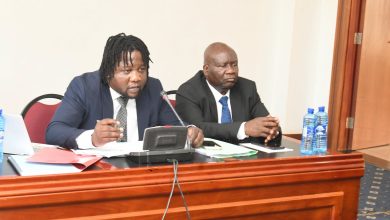
In an interview, Sovereign Metals country manager Maxwell Kazako said after doing several activities inline with both Malawi and international requirements, they are at a stage where they need a mining licence from Malawi government.
“Sovereign is there to make sure that it is adhering to all environmental requirements and this is the reason we have been working with specialists for one year-and-a-half on our Environmental and Social Impact Assesment (Esia).
“We have been working with specialists, studies on going, (on Esia) just to make sure that when we are granted the mining licence by the government, surely we should be in total adherence to all the requirements that are there,” Kazako said.
Meanwhile, Sovereign technical manager Andreas Kruger highlighted that the licence is critical now because it is not appropriate to go ahead with community relocation without the licence.
Kruger also said there is need for government to declare the Kasiya project as one of the national priority projects to guarantee its involvement on issues like community relocation even though those affected will be compensated.
“The government’s involvement is critical because this is a huge project and the relocation could affect close to 10 000 people,” he said.
In an interview, Minister of Mining Thoko Tembo pledged government’s support to Sovereign’s Kasiya project saying the suspension of mining incense issuance was necessary to sanitise the industry and that the reviewing process will be completed soon.
Tembo said: “There was a lot of chaos in the mining sector and because of that the President saw it fit that we should suspend the issuance of new mining licences until we have done a review on that.
“This review is being done, we will do it in the fastest time possible and we will be communicating when that is finalised.”
During a recent visit to Sovereign metals laboratory and it’s project site in Lilongwe, Tembo challenged the company to explore value addition like establishing production facilities for products such as welding rods for beneficiation purposes.
But Kruger said the company’s core business will remain the extraction and production of high-purity rutile and graphite for export while it could work with Government to identify investors interested in establishing local processing industries, to supply them with the required raw materials.
Definitive feasibility study results for Kasiya Rutile project showed that the mine would generate $16.2 billion (about K28.35 trillion) revenue for an initial life of the mine of 25 years, up from K18 trillion from its pre-feasibility study in 2023.
The study shows that the mine’s annual EBITDA (earnings before interest, taxes, depreciation and amortisation) is projected at $476 million (about K833 billion) and operation cash of $452 million (about K791 billion).
Already, Sovereign Metals has signed non-binding off-take memorandums of understanding (MoUs) covering over 50 percent (70 000 metric tonnes) of stage 1 rutile production with Mitsui & Co., a Japanese trading and investment firm.
It also signed roughly 35 percent or 40 000 MT per annum of graphite concentrate off-take deal with Traxys Traxys North America.
Kasiya Mine is positioned to become one of the world’s largest rutile producers at 222 kilotonne per annum (kt/a) for an initial 25 years, but also potentially one of the world’s largest natural graphite producers outside of China at 244kt/a.